| |
Fieldwalking
and Earthwork Survey
Field-walking (or Surface Artefact Collection) is a technique well-suited
to rapid initial appraisal of the archaeological potential of a
site, or group of sites. The identification and spatial analysis
of artefacts systematically collected from the ground surface can
offer valuable clues to the distribution of archaeological sites,
and help in the formulation of mitigation strategies, or in the
design of further fieldwork.
The obvious problem with the technique is the need for open,
preferably recently-ploughed areas for investigation, and hence
it is entirely unsuitable for urban sites, or most brownfield
sites. However field-walking can be a useful tool on large-scale
rural sites, for instance in advance of housing schemes, and has
been used extensively by ASE in the investigation of new road
corridors.
 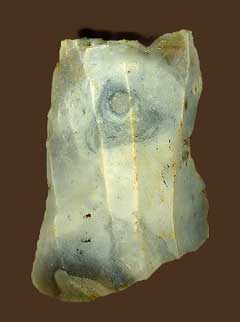
Examples of ASE projects which have incorporated a fieldwalking
element include:
- A27 Polegate Bypass, East Sussex
- A27 Patching Junction Improvement, West Sussex
- A24 Horsham-Capel Improvement, West Sussex/Surrey
- Eastanton Manor Development, Andover, Hampshire
|
|


